


Algocare At Work is an AI-powered personalized nutrition service designed for corporate wellness.
Deployed in offices, cafeterias, fitness centers, hotels, and co-living environments, the solution allows users to receive daily, customized supplements through an IoT device called the Nutrition Engine.
This smart dispenser utilizes health surveys and user lifestyle data to generate real-time personalized nutrition blends using ultra-micro supplements (4mm in size).
The dosage is tailored down to the milligram, based on the individual’s needs, and adapts daily to changing conditions such as fatigue, menstrual cycle, stress, or dietary habits.
All intake records are automatically logged and analyzed, supporting continuous wellness tracking and preventive care.
This enables organizations to offer data-driven, sustainable health benefits without the administrative burden of manual wellness programs.
Algocare At Work has been successfully adopted by more than 50 leading companies in Korea, including LG Energy Solution, Hyundai Motor Company, SK Square, and POSCO E&C.
It is also expanding into hospitality (e.g., Walkerhill Hotel), premium fitness centers, and elite academies, redefining wellness at work through hyper-personalization, automation, and AI integration.
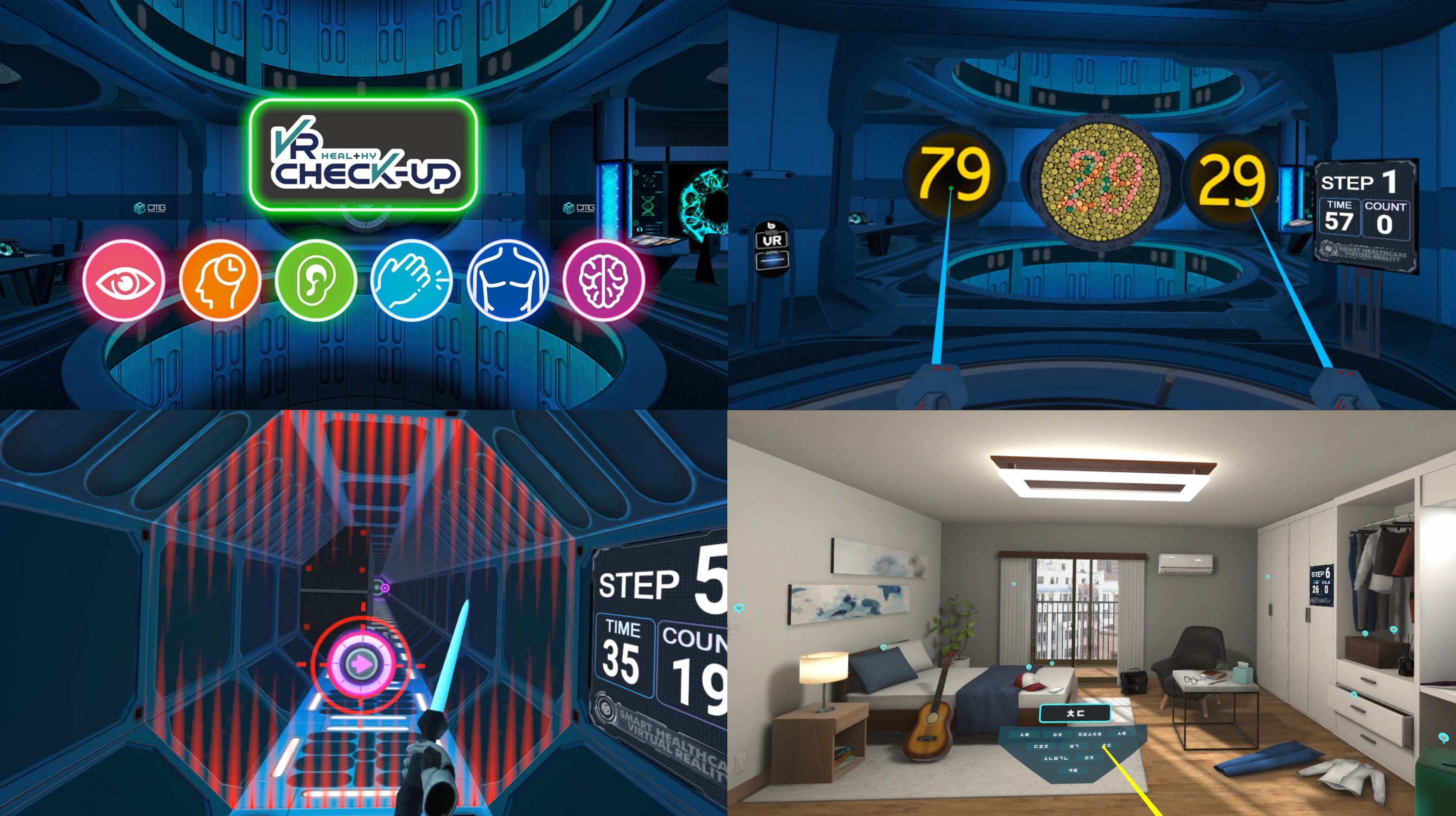
The VR Physical Check-up Program is a medically validated and engaging healthcare solution that allows users to perform six different physical assessments in a virtual environment, as if playing a game. It combines medical accuracy, interactivity, and professionalism to provide a functional and immersive experience.
Step 1: Color Vision Test
Users identify numbers within images based on the Ishihara color test plates, assessing color perception.
Step 2: Memory Test
A short-term memory test where users match pairs in a puzzle format to evaluate memory retention.
Step 3: Hearing Test
A pure-tone audiometry test using electronically generated tones across various frequencies to measure hearing ability.
Step 4: Reaction Speed Test
Users quickly respond to randomly appearing lights by turning them back on, measuring visual and motor reaction time.
Step 5: Instant Perception Test
Users must hit targets flying in from random directions while avoiding obstacles by moving in the opposite direction, testing perception and coordination.
Step 6: Brain Activity Test
In a virtual environment, users guess the correct answer by observing objects and their initial consonants, evaluating problem-solving and cognitive skills.
Comprehensive Evaluation
After completing all six tests, the program calculates a total score to determine the user's "physical age," providing tailored health insights ranging from teenage to senior age groups.
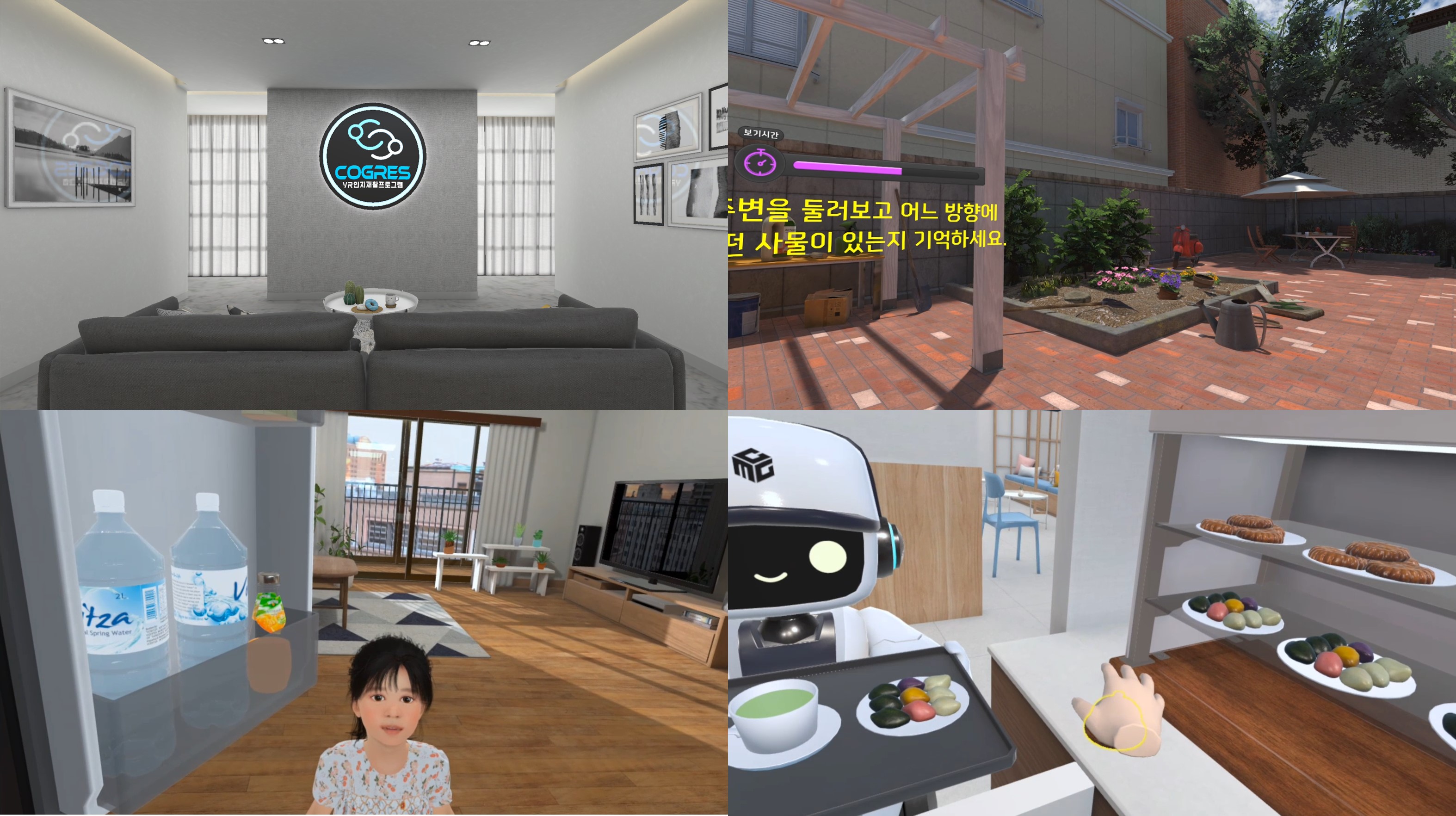
We have developed immersive daily-life-based VR scenarios specifically designed for elderly individuals with mild cognitive impairment (MCI). By incorporating clinically validated evaluation indicators and algorithms, our program enhances the effectiveness of cognitive training and provides a comfortable training environment for users. Additionally, a user information management platform enables personalized programs by identifying cognitive domains for each user.
Step 1: Cognitive Function Assessment
Using motion-recognition-based cognitive evaluation methods, we assess the user’s cognitive state through six individual test domains: visual perception, visuomotor coordination, constancy, spatial perception, situational awareness, and spatial relations.
Step 2: Activities of Daily Living (ADL) Evaluation
Users perform six evaluation tasks that simulate real-life social challenges commonly faced by the elderly. These tasks combine spatial and visual elements in a storytelling format designed to stimulate memory.
Step 3: Cognitive Rehabilitation Training
Based on the cognitive abilities identified in Steps 1 and 2, users undergo functional game-based cognitive rehabilitation training. The training targets specific areas of deficiency and allows for content selection, repetition, and focused practice.
Step 4: Learning Management Platform
The system collects and visualizes data from all assessment and training stages. It provides a clear overview of improved cognitive domains and the user's overall cognitive status, and offers personalized training recommendations for continuous cognitive enhancement.

HealthBridge 1.0 comprises the fourth-generation Android-based smart medication monitoring devices (Home Gateway), an in-home device capable of medication reminders, adherence detection, and connection with physiological measurement devices. It also includes the Remote Home-based Monitoring Service (RHDMS), a web-based service with real-time storage, monitoring of medication data, various physiological signals, and customizable automatic feedback functions.
The collected information is linked to a single-search-based Hyperledger Fabric blockchain network. Additionally, it offers WebRTC-based 1:1 video consultation services integrated with collected data, enabling real-time remote patient monitoring (RPM), real-time remote therapeutic monitoring (RTM), and chronic care management (CCM). Furthermore, it can be extensively utilized in other areas such as remote medication clinical trials, infectious disease management, and dementia patient care.
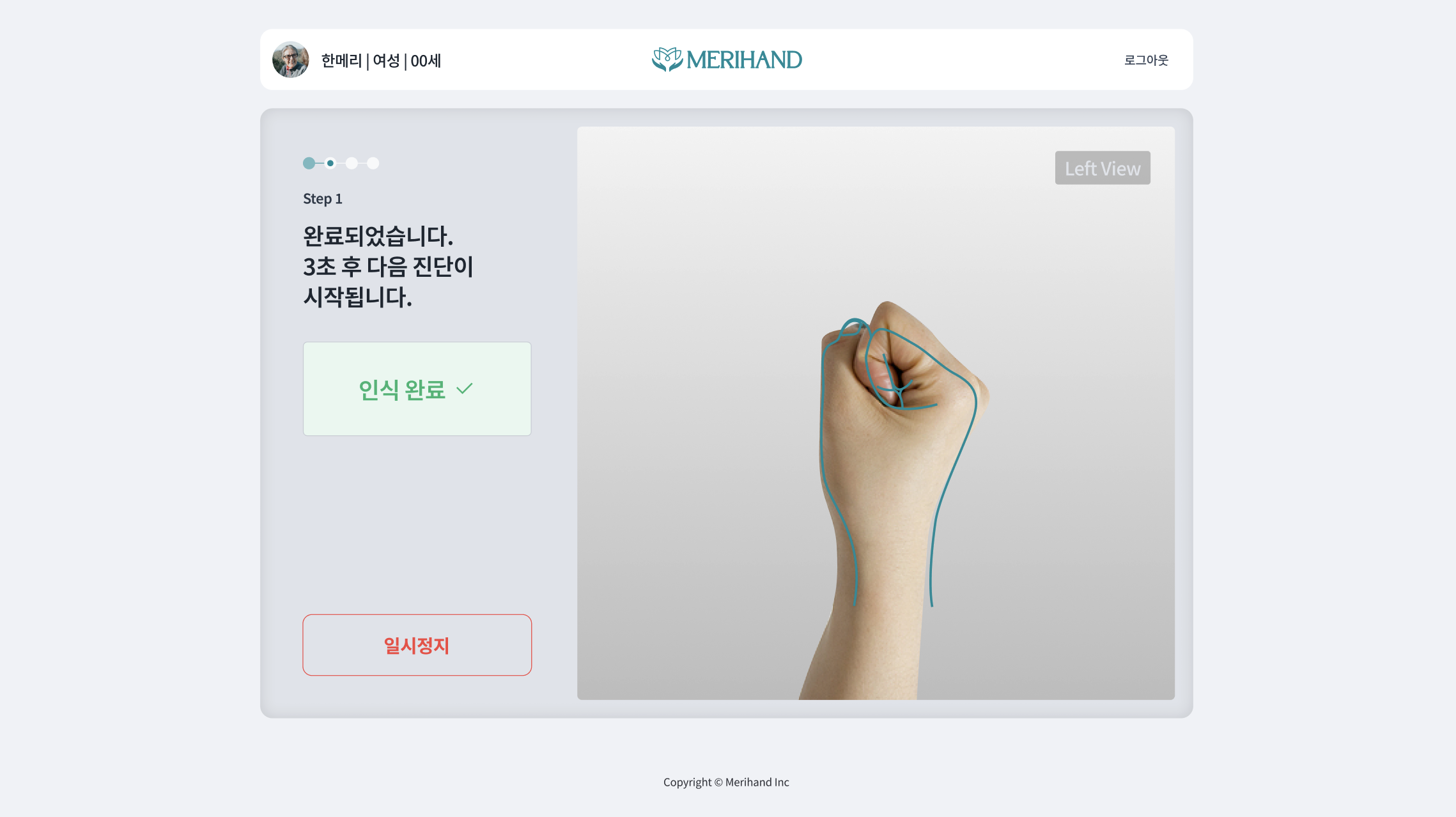
Dia-Grip is MERIHAND’s musculoskeletal analysis software that precisely measures the range of motion (ROM) and muscle function of the hand and wrist.
Based on ultra-high-resolution hand joint tracking and muscle activation analysis,
it provides a detailed assessment of the patient's current functional status,
visualizing muscle weakness and imbalances through objective data.
Dia-Grip is used not only for initial evaluation but also for tracking therapy progress and establishing customized rehabilitation plans,
enabling a more scientific and quantitative approach to hand rehabilitation.
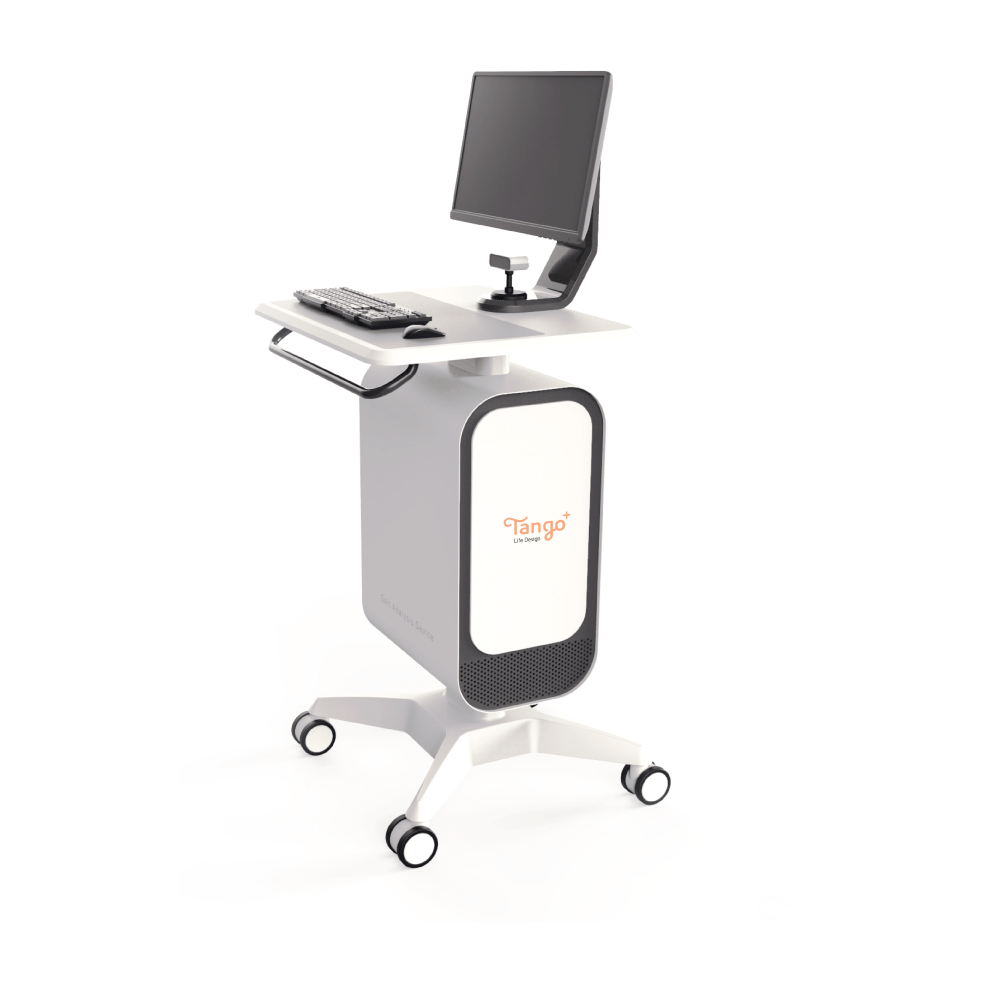
Gait Analysis System (Tango STEP)
The Tango STEP is a product developed to help prevent falls among the elderly by precisely analyzing users’ gait patterns using a depth camera and a pressure sensor mat.
Through this detailed analysis, it enables early detection and prevention of fall risks, allowing users to maintain a safer and more confident daily life.
Tango STEP is currently registered as a non-reimbursable medical device and is trusted and actively utilized in hospital settings, including neurology, otolaryngology, and rehabilitation medicine departments.
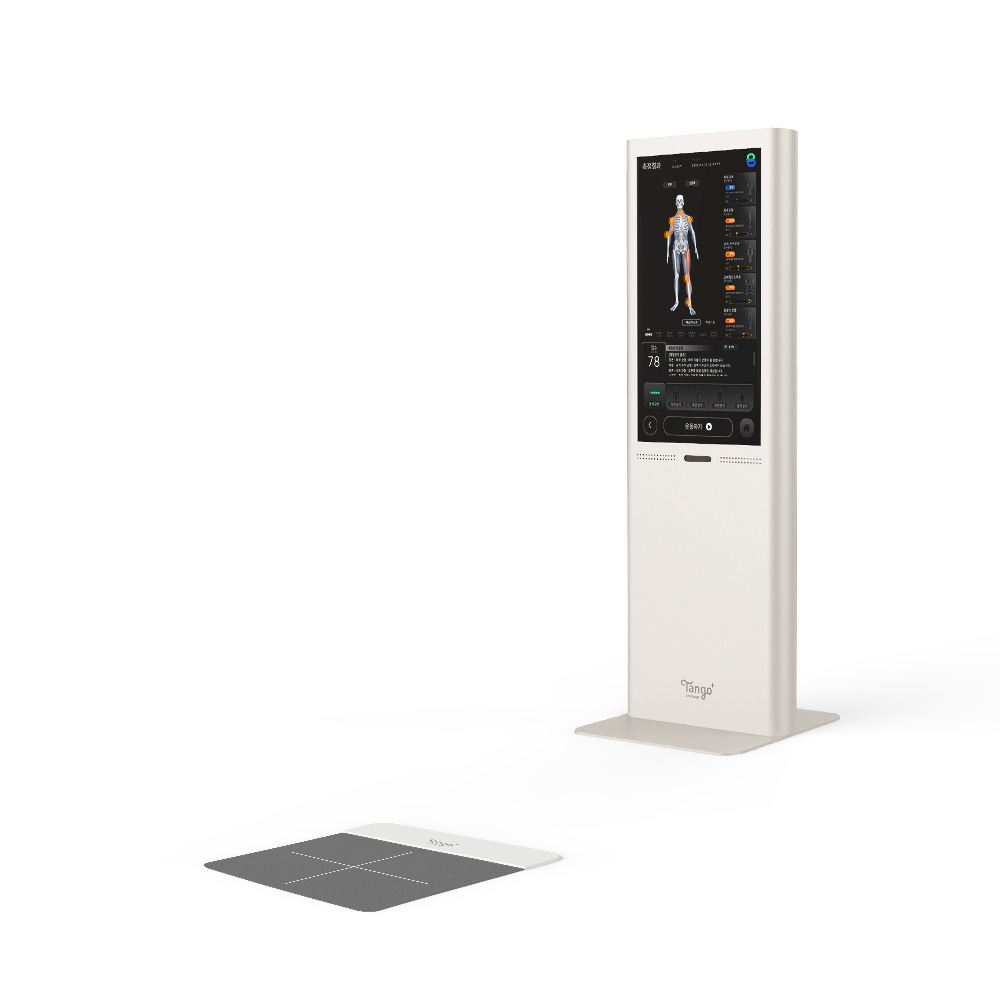
Tango Body (Posture and Balance Analysis Platform)
The Tango Body platform utilizes CCD (Charge-Coupled Device) cameras, depth cameras, and a foot pressure measurement device (FSR Mat) to comprehensively analyze users’ posture and balance, helping to predict the risk of musculoskeletal disorders. Additionally, it conducts precise assessments of physical function through range of motion (ROM) measurements, and based on the analysis results, provides personalized exercise programs to support systematic health management in daily life.
All results are seamlessly linked with a mobile application, enhancing user convenience. Through this process, users can easily monitor changes in their physical condition and take an active role in maintaining their health.

exoPill is a wearable digital healthcare medical device that measures muscle biosignals and provides personalized treatment solutions through proprietary AI analysis technology. It enables professional rehabilitation exercises and therapy at home or in care facilities without the need for hospital visits, bringing innovation to muscle health management for the elderly and individuals with musculoskeletal disorders.
Designed to be lightweight and compact enough to fit in one hand, exoPill is easy for anyone to wear and use, making it ideal for diverse environments such as rehabilitation centers, nursing homes, and home settings.
Based on measured biosignals, exoPill automatically sets optimized frequencies tailored to the user's muscle condition, supporting personalized FES/NMES electrical stimulation therapy. It also offers nine specialized modes to address various conditions, including chronic and acute pain, ensuring customized and effective treatment.
exoPill provides over 40 tailored exercise programs, featuring videos for both seated and standing exercises. During exercise, electrical stimulation is synchronized to enhance muscle activation, maximizing rehabilitation outcomes.

1. Monitoring biometric information:
Non-contact, self-awareness-based sensors installed on beds measure heart rate, respiratory rate, and movement, and medical staff and guardians can monitor the patient's condition in real time through monitoring, making it more convenient to monitor patients.
2. Wandering detection and fall prevention:
By using bed sensor and beacon technology, the location and movement of the patient are informed in real time through the detection of whether the patient has fallen, left the bed, and wandering, it contributes to the efficient work of medical staff. In addition, it is possible to prevent accidents and respond quickly by immediately knowing whether patients have left without permission. The patient can also immediately grasp information on falls from the hospital bed and falls while on the move, thereby preventing fall prevention or secondary risk caused by falls.
3. Emergency Notification Service:
It calculates the risk index of biometric information through a situation recognition algorithm and enables quick response measures through quick notification through immediate notification to medical staff in the event of an emergency.
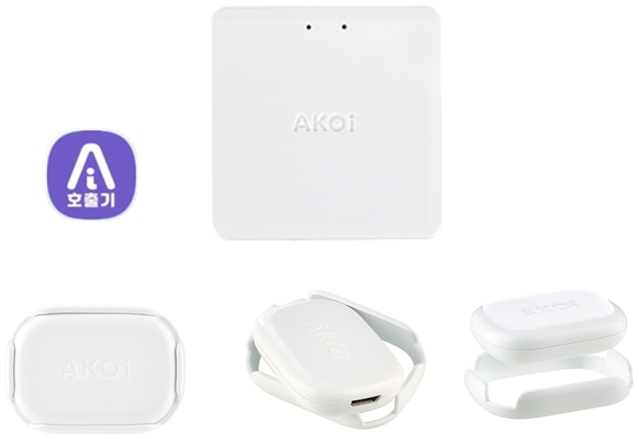
For elderly people wearing diapers, we want to protect their health by attaching an Acoheart sensor to the diaper to quickly and accurately detect urination.
In the case of elderly people with poor health, delayed diaper changes can spread to the kidneys through the urinary tract. (When feces and urine mix, E. coli, etc.)
In particular, for elderly people and patients who have difficulty communicating, quick diaper changes can prevent urinary tract infections and skin rashes (bedsores, etc.), and quick diaper changes can remove odors and prevent bedding contamination.
Quick diaper changes can also prevent odors and bedding contamination for dementia patients.